

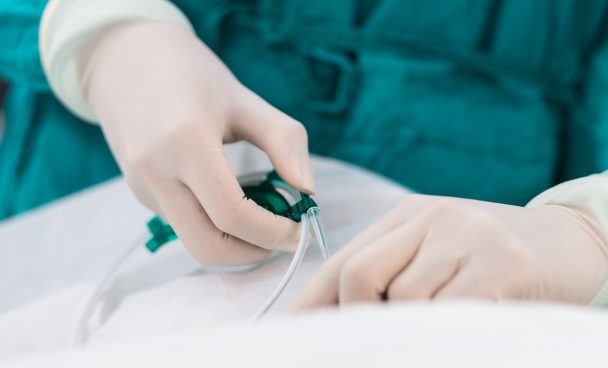
How Catheter Maintenance Is Done
Catheter maintenance is the procedure performed during your treatment, always after each use and after the end of treatment every 90 days, ensuring its proper functioning, avoiding obstruction or premature loss of the catheter. This procedure is performed by a specialized Nurse, who observes its functioning, skin appearance, swelling, local redness, or any reported complaints. Salinization prevents the formation of blood clots (thrombi) that can form inside the catheter among other events.
Why is it necessary to maintain the catheter?
In cancer treatment, it may be necessary to administer medications into the veins of patients frequently. Commonly, devices such as a catheter in the heart, nasal catheter, oxygen catheter, hemodialysis catheter, among others, are inserted to avoid repeated needle punctures, which can cause vein injuries and/or inflammations. A central venous catheter (CVC) is used to administer medications directly into the bloodstream.
Even though they are safe and provide comfort in the administration of medications such as chemotherapy drugs, catheters can become obstructed due to clot formation or drug precipitation. Therefore, maintenance is necessary to keep the catheter permeable and prevent complications from drug interactions.
How and how often is it done?
The Oncoclínicas Group performs maintenance of the central venous catheter through the two currently available methods:
- Salinization – this involves the practice of irrigation under positive pressure, with saline solution and at regular intervals, of vascular devices; and
- Heparinization – it is the practice of filling the device’s lumen with heparin solution (an anticoagulant).
The frequency of maintenance by salinization depends on the type of catheter:
- Peripherally Inserted Central Catheter, also known as PICC (long intravenous device, inserted into peripheral veins, especially the basilic and cephalic veins of the upper limbs) – maintenance is done by salinization, always after use or every seven days;
- Totally Implantable Central Catheter, such as Port-a-Cath (device used for medication administration and blood collection, consisting of a reservoir and a catheter made of silicone, plastic, or titanium) – Salinization maintenance should be done always after use and every 90 days for patients who have already completed their treatment.
Permcath (long-term catheter implanted in a central vein, usually the jugular in the neck or the subclavian or femoral) – used for hemodialysis, a blood filtering procedure for patients with failing kidneys, its maintenance is done by heparinization after each use or every 3 days in the longer intervals when it is not being used.
Learn more about the use and care of the catheter at this link.


